
When a Weld's History Is Unknown
Welding Inspections in Spartanburg for existing welds of uncertain age, quality, or load history
Older structures and fabricated equipment carry welds that were laid down by unknown hands, to unknown standards, sometimes decades before the current owner took possession. Weld Source Mobile Welding provides on-site welding inspections in Spartanburg, giving owners a direct answer about whether those welds can be trusted before weight or stress is applied to them. The inspection is performed personally by the licensed, insured owner, not a subcontractor reviewing someone else's notes.
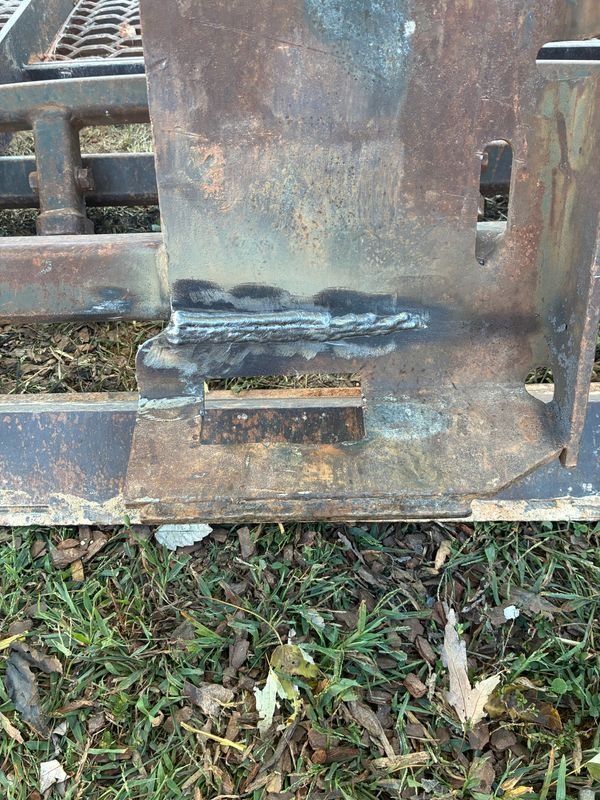
During an inspection, the owner examines each weld for the three failure patterns that matter most in field and structural work: cracks that may have propagated from an original defect, undercut along the weld toe where the base metal has been thinned, and incomplete penetration where the weld did not fuse through the full joint depth. What he finds is explained in plain terms, not industry shorthand, so you know what condition you are actually dealing with. Because Spartanburg's older housing stock and small commercial buildings often carry welded repairs and structural additions of uncertain age, an inspection answers whether the existing weld is load-worthy or needs to be addressed before the next use.
Request an on-site inspection to get a plain-language assessment of your existing welds before putting load on them.
What an Inspection Actually Produces
The inspection starts with a visual and tactile examination of the weld profile: the owner looks at bead geometry, checks for surface porosity, and uses a grinder where needed to expose the subsurface condition of a suspect area. He notes his findings and records what he observed at each joint or repair location so you have a documented baseline to work from, not just a verbal opinion at the end of a walk-through.
After the inspection, you will know which welds are structurally sound, which are marginal, and which require immediate repair. That clarity lets you make decisions about loading, use, or sale with actual information rather than assumptions. Property owners in Campobello and Greer who have inherited structures with welded modifications find this especially useful before placing the building back into active service or transferring ownership.
If a repair is needed, the owner can carry it out on the same visit or provide a written scope of the required work, so you are not waiting for a second mobilization. The scope states exactly what the repair covers before any work begins, with materials and method agreed in advance.
Answers About How the Work Is Done
These questions address how welding inspections are performed, what the examination involves, and what owners can expect from the process on older Spartanburg-area structures and equipment.
What does a welding inspector actually look for during an examination?
The inspection targets three primary defect types: cracks propagating from the weld or heat-affected zone, undercut along the weld toe where base metal has been thinned below minimum thickness, and incomplete penetration where the weld did not fuse the full joint depth. Surface porosity and bead geometry are also evaluated as indicators of the original weld quality.
How is the extent of a crack determined during an on-site inspection?
The inspector grinds away the surface layer at the suspected area to trace the crack to its full visible extent, which prevents a repair from stopping short of the actual defect boundary and failing again under load.
When is a welding inspection necessary before using a structure or piece of equipment?
Any time a welded repair or structural modification was made by a previous owner, a fabricator of unknown standard, or outside of a documented procedure, an inspection establishes whether the weld meets the load demands being placed on it before those demands are applied.
Why do welds on older Spartanburg commercial and residential properties require closer scrutiny than welds on newer fabrication?
Buildings and equipment from earlier decades were often repaired in the field without written procedures, and weld quality varied significantly between tradespeople. Inspecting those joints before adding load or modifying the structure identifies defects that are not visible without a trained examination.
What documentation will you receive after the inspection is complete?
The owner records observations at each examined joint and explains findings in plain language so you have a clear written reference describing the condition of each weld, what it means, and what action, if any, is warranted.
Weld Source Mobile Welding also performs welding inspections in Greenville, Gaffney, Inman, Union, and Rock Hill. To schedule an inspection on your Spartanburg property or equipment, call (864) 357-8278 and describe what you have so the owner can prepare for what he will find on site.