On-Site Repair Without Hauling the Whole Piece In
Custom welding in Spartanburg for cracked, broken, and corroded metal on residential and commercial properties
A cracked trailer tongue, a broken equipment frame, a corroded support member on an older outbuilding — these are jobs where the cost of replacement is out of proportion to what the repair actually requires. Spartanburg's mix of older homes, small commercial buildings, and rural properties means many welding jobs are a single damaged component that is more practical to fix in place than to replace entirely. Weld Source Mobile Welding handles custom welding and repair work for exactly that situation, with the owner bringing a mobile rig to the property, making the repair on site, and taking small and medium jobs that larger shops often decline. He is licensed, insured, and available by phone around the clock for emergency calls.
Most repair jobs are quoted after the owner sees the damage directly. He brings the welder, the appropriate gas or wire equipment, and the material the job requires, so a visit that starts as an inspection does not require a second trip for materials. The repair is made, the weld is checked before he leaves, and minimum-charge visits cover roughly two hours of work plus travel — a structure that keeps small repairs from being priced out of reach. For properties in areas like Cowpens and Lyman where rural access means a tow or a haul would be a half-day job in itself, on-site repair eliminates that cost entirely.
Call Weld Source Mobile Welding at (864) 357-8278 to describe the damage and confirm whether a same-day or next-day visit fits the scope of the repair.
What On-Site Welding Actually Accomplishes
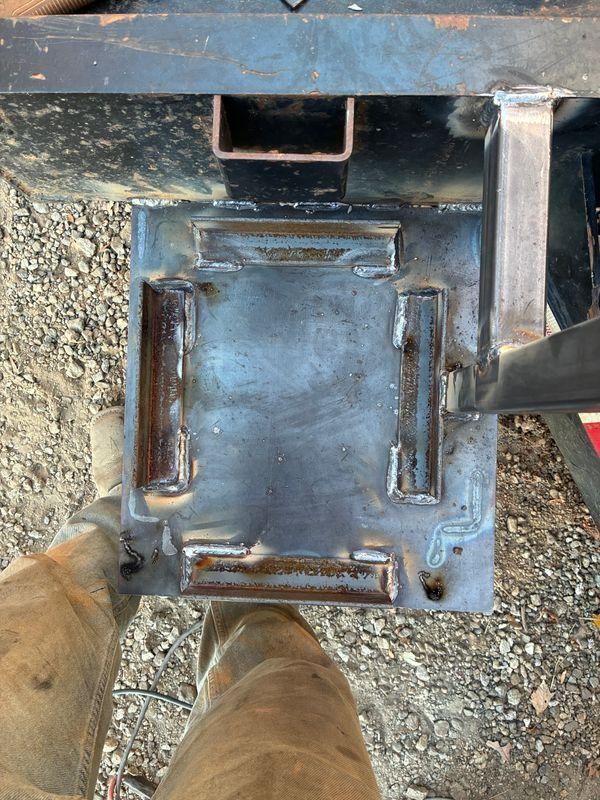
Mobile welding covers more application types than trailer repair. The owner handles fence repairs, equipment frames, gate hardware, structural tabs, support brackets, and corroded connections on older metal structures — any situation where the damaged component is accessible in place and the weld can be made without disassembling the surrounding structure. The key decision on every repair job is whether the material adjacent to the damage is sound enough to weld to; if the base metal is too far corroded, a weld bead applied to it will pull out under load even if the weld itself is clean.
After the repair is complete, what you have is a joint that carries the load it was designed for, with no visible crack or separation at the repair point. Weld Source Mobile Welding checks the weld before leaving the property — both visually and by applying load where the geometry allows — so the repair is confirmed functional before the visit closes. On an older commercial property where a corroded connection has been carrying reduced load for some time, the repair also removes the progressive failure risk: a weld bead over the top of corrosion does not do that, which is why the damaged area is cleaned back to sound metal before the new weld is laid.
Emergency availability matters for certain repair types — a broken trailer running gear, a gate that will no longer latch and cannot be secured, a structural support on a building that has shifted. The owner answers the phone 24/7 for those calls. Non-emergency repairs are scheduled in the normal rotation, and the same process applies: the owner sees the damage first, quotes the job, and makes the repair in one visit where the scope allows.
Questions Before Starting Your Project
The questions below address how mobile welding repair jobs are scoped and executed, including what affects the repair approach and what you can expect during the visit.
How does the owner determine whether a repair is practical before starting?
He inspects the full extent of the damaged area, checks the base metal adjacent to the crack or break for corrosion and thickness, and confirms that the surrounding structure can carry the weld without additional reinforcement.
What welding equipment is brought to a mobile repair job?
The owner's mobile rig carries both MIG and stick welding capability along with the gas supply, so the process is selected based on material type, position, and access rather than being limited by what a single machine can do.
Why is cleaning back to sound metal a required step before welding over a corroded joint?
Welding into corroded base metal introduces porosity and inclusions into the weld that reduce its load capacity, so the corroded section has to be removed to the point where the steel is solid before a repair weld is worth making.
What kinds of residential repair jobs in Spartanburg are typically handled in a single visit?
Gate hardware, broken fence rails, cracked support brackets on outbuildings, and split trailer components are all jobs where the damage is localized and the material is accessible, allowing the full repair to be completed in one trip.
How is the finished weld checked before the visit closes?
The owner inspects the weld visually for coverage, surface porosity, and edge fusion, then applies mechanical load at the repair point where the geometry allows — a pull test on a gate latch weld, for example, or a flex check on a repaired frame member.
Weld Source Mobile Welding also handles custom welding and repair work in Greenville, Gaffney, Inman, Union, and Rock Hill. Reach Weld Source Mobile Welding at (864) 357-8278 to describe your repair and arrange a visit to assess the damage in person.